

A common question you may have when considering dermal fillers is simple: How long do the results last? In general, most hyaluronic acid-based fillers last 6 to 18 months, depending on the formulation. Some fillers can last even longer. However, each facial area metabolizes filler differently based on movement, skin thickness, and the depth at which the product is placed.
That’s why one person may enjoy a year of lift in the cheeks while lip enhancement naturally breaks down faster. In this guide, you’ll learn what to expect in each region of the face. At Quintessa, we use FDA-approved fillers and advanced techniques to maximize longevity while maintaining natural results. Below, we explain how long fillers typically last in different areas and what influences their duration.
Cheeks
Average longevity: 12 to 18 months
Your cheeks tend to retain filler longer than other facial areas because the product is strategically layered to provide structural support. At Quintessa, cheek enhancement involves precise placement both deep along the bone and within the superficial fat pads (never in the muscle layer) to maximize lift and maintain natural movement. Dermal fillers like Juvéderm Voluma or Restylane Lyft are chosen for their high G-prime and cohesivity, allowing them to create contour, restore midface volume, and resist breakdown over time.

Nasolabial Folds (Smile Lines)
Average longevity: 6 to 12 months
The nasolabial folds move frequently when you smile, talk, or laugh, which contributes to slightly shorter filler duration. Softer, flexible fillers are typically used here to maintain natural expression while gently softening the creases that run from the nose to the corners of the mouth. You can expect subtle smoothing that refreshes your appearance without altering your facial character. Because this area sees continuous motion, touch-ups are needed every 9 to 12 months.
Marionette Lines
Average longevity: 6 to 12 months
Located between the corners of your mouth and chin, marionette lines deepen with age due to volume loss, gravity, and repetitive facial movement. Dermal fillers help lift the corners of your mouth, restore balance to the lower face, and soften the shadows that can make you look tired or stern. Because this region is mobile, fillers tend to break down a bit faster than they do in the cheeks. Still, with the right technique, you can enjoy up to a year of improvement.
Tear Troughs (Under-Eye Hollows)
Average longevity: 9 to 12 months
The under-eye area is delicate and thin, making it a region that requires expert precision. Fillers like Restylane-L or RHA Redensity are selected for their smooth, flexible consistency, which allows them to integrate into the tissue without causing puffiness or a visible transition. Because the tear trough experiences less repetitive movement than the lips or lower face, the results often last close to a year. You’ll likely see a brighter, more rested appearance almost immediately, with optimal results appearing once any minor swelling resolves.
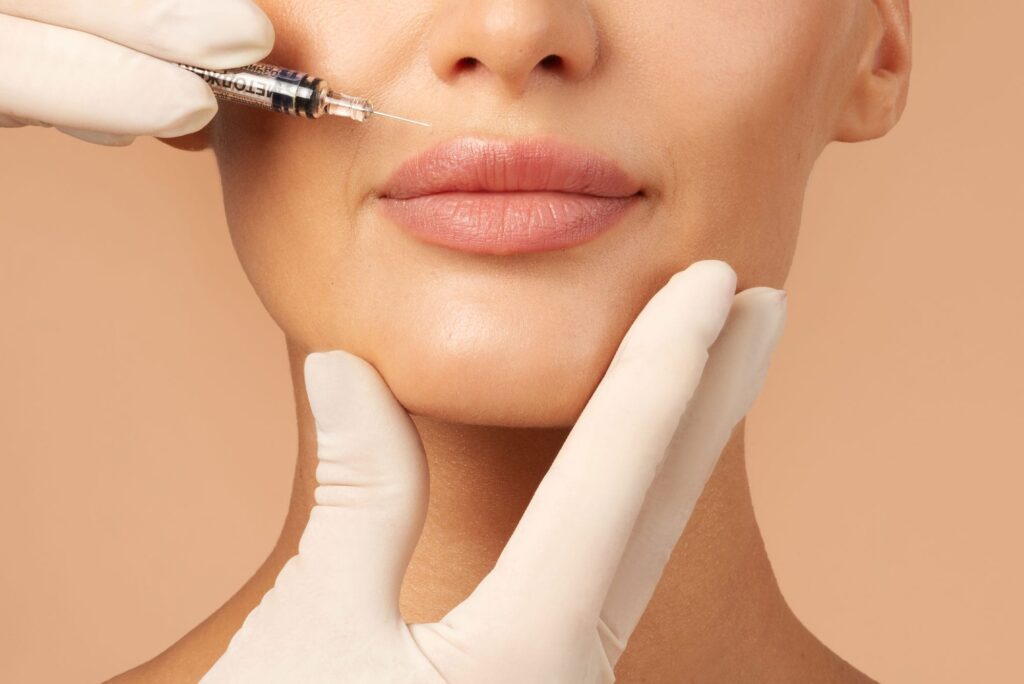
Lips
Average longevity: 6 to 12 months
Because your lips are constantly in motion (eating, drinking, speaking), filler breaks down here faster than in most other areas. Soft, hydrophilic fillers are used to enhance volume, improve symmetry, and create definition along the lip borders. If this is your first time getting lip fillers, you may metabolize the product slightly faster as your body acclimates. Most clients appreciate touch-ups every 6 to 10 months to maintain the fullness and shape they love.
Jawline
Average longevity: 12 to 18 months
Jawline fillers help restore structure and create sharper definition along the lower face, an area that naturally changes with age. Over time, the chin and mandibular ramus gradually resorb, which can cause fat pads to shift forward and soften the jawline’s contours.
To counteract this, we use robust, highly cohesive fillers such as Juvéderm Volux, specifically engineered to mimic the density and support of bone. This allows us to rebuild the foundational angles, enhance projection, and create a more sculpted profile. Because the jawline undergoes minimal repetitive motion, the results hold their shape beautifully and last well over a year.
Chin
Average longevity: 12 to 18 months
Chin fillers play a critical role in improving facial proportion, enhancing profile balance, and increasing forward projection. While it’s true that we use the mentalis muscle frequently, given that we speak over 15,000 words daily, the key factor influencing longevity here isn’t movement alone. Instead, it’s the selection of a highly cohesive, structural filler and the depth at which it’s placed that determines how well results hold.
By using robust products that mimic foundational support, chin augmentation can create definition that lasts well over a year. Many clients find that subtle chin enhancement delivers one of the most instantly transformative yet natural-looking improvements to facial harmony.
Tips to Extend the Longevity of Dermal Fillers:
- Avoid excessive sun exposure
- Protect your skin daily with broad-spectrum SPF
- Follow all aftercare instructions from your injector
- Maintain good hydration
- Adopt a consistent skincare routine
- Schedule touch-ups before full correction fades
- Choose an experienced injector for precise placement
- Avoid smoking, which accelerates the breakdown
- Support your skin with a healthy lifestyle and nutrition
Dermal fillers offer beautiful, customizable, and natural-looking enhancements when used strategically across the face. Understanding how long each area typically retains its results helps you plan a treatment timeline that aligns with your goals.
At Quintessa, our expert injectors tailor every filler plan to your facial anatomy, aesthetic preferences, and lifestyle, ensuring results that feel authentically you. If you’re ready to explore what dermal fillers can do for you, schedule your personalized consultation today.