
You have cleared your calendar for a facelift, arranged a ride home, and perhaps taken a week or two away from work. But what will you actually look and feel like three days after surgery? When will the swelling stop attracting attention? And, more importantly, how can you tell the difference between normal postoperative swelling and a complication that deserves an immediate call to your surgeon?
Understanding recovery before surgery can make the process considerably less uncertain. At Quintessa Aesthetic Center, serving Milwaukee-area patients with Wisconsin locations including Brookfield, Delafield, and Mequon, facelift planning includes evaluating your anatomy, overall health, and goals before selecting an appropriate surgical approach. This guide explains the risks worth understanding, as well as a realistic week-by-week timeline for healing.
Common facelift risks and complications
Every surgical procedure carries risk, and a facelift is no exception. Possible complications may include bleeding, infection, fluid accumulation, facial nerve injury, poor wound healing, skin loss, persistent pain, prolonged swelling, anesthesia-related complications, and more. That list can sound intimidating, but actual complication rates may help put these into perspective.
Hematoma
A hematoma is a collection of blood beneath the skin and is the most common complication requiring surgical intervention. A review of literature reported a 1.8% incidence of expanding hematoma, while a later analysis of a plastic surgery outcomes database found a similar rate of 1.97%. Approximately 90% of facelift hematomas occur within the first 24 hours.
Infection
Infection is possible whenever an incision is created, although reported rates following facelift surgery are relatively low. In a 241-patient outcomes study, 2.49% of patients developed an infection. Increasing rather than improving redness, warmth, drainage, fever, or worsening tenderness can warrant evaluation. Your surgeon will provide specific wound-care instructions, and following them carefully forms an important part of recovery.
Seroma
A seroma occurs when fluid collects beneath the skin. It differs from a hematoma because the collection primarily consists of serous fluid rather than blood. The 241-patient study reported seroma formation in 1.66% of patients. A seroma may create localized swelling or a fluid-like sensation beneath the skin. Depending on its size and persistence, your surgeon may simply monitor it or recommend drainage or another intervention.
Temporary or permanent nerve injury
Facial nerves are understandably a major concern because branches of the facial nerve control facial movement. Injury can result in temporary or permanent weakness, while sensory changes and numbness may also occur after surgery. Importantly, the 241-patient study recorded no transient or permanent facial nerve injuries.
Poor wound healing and skin loss
Facelift surgery requires the elevated skin to maintain an adequate blood supply while it heals. Delayed wound healing and skin loss can occur, and smoking is an especially important risk factor. A clinical review cited research findings that active smokers were 12.46 times more likely than nonsmokers to experience postoperative skin loss.
Overall complication risk
In a retrospective study following 241 facelift patients, researchers recorded 32 complications, for an overall complication rate of approximately 13%. Hematoma was most common at 5.81%, followed by infection at 2.49% and seroma at 1.66%. There were no cases of DVT or transient or permanent facial nerve injury in that series.
These numbers should not be interpreted as your personal probability of experiencing a complication. Your health, procedure, anatomy, medications, smoking history, blood pressure, and other factors all influence individual risk.
How to lower your risk before surgery
Some surgical risks cannot be completely eliminated. Others are influenced by factors you and your surgical team can address before the operation. Your preoperative period is therefore part of your facelift, not merely the waiting period before it.
Review medications, supplements, and blood thinners
Provide your surgeon with a complete list of everything you take, including prescription medications, over-the-counter drugs, vitamins, herbs, and supplements. Certain products can increase bleeding risk. You may therefore be instructed to stop non-essential medications or products that increase bleeding 10 to 14 days before surgery. However, never independently stop a prescribed anticoagulant without consulting your surgeon or prescribing physician.
Stop smoking and using nicotine
Nicotine and facelift recovery are a poor combination because smoking can compromise blood circulation to healing skin. Evidence reviewed in the surgical literature links active smoking to substantially greater skin-loss risks. How seriously do surgeons take this? A survey of ASPS members found that approximately 50% would not perform facelift surgery on an active smoker.
Get your blood pressure under control
Blood pressure is especially relevant to hematoma risk. A review of facelift complications identified elevated systolic blood pressure as the most common modifiable risk factor for postoperative hematoma. If you have hypertension, make sure your surgeon knows. Do not skip or change antihypertensive medication unless instructed. Blood pressure can also rise because of pain, anxiety, nausea, or vomiting, which is why careful perioperative management is crucial.
Prepare your home before surgery
Risk reduction continues after you leave the surgical facility. Prepare your recovery space beforehand so you do not need to bend, lift, run errands, or search for supplies during the first few days. Arrange reliable transportation and help at home as directed. Have medications, easy-to-prepare food, water, and other recommended supplies readily accessible. Create a comfortable sleeping arrangement that allows you to keep your head elevated.
Follow your surgeon’s instructions, not a generic online checklist
Quintessa offers multiple facelifts, including deep-plane, SMAS, mid, mini, and revision facelifts, with the technique selected according to your anatomy and degree of aging. Your recovery instructions may therefore differ from those of someone who underwent a different operation. Treat your postoperative directions as the authoritative guide for medications, incision care, bathing, activity, compression, sleeping position, and return to exercise.
Week-by-week facelift recovery timeline
Recovery is progressive rather than instantaneous. You should expect your appearance to change considerably between the first postoperative morning and the end of the first month. Quintessa advises Milwaukee facelift patients to anticipate swelling, bruising, tightness, and mild discomfort during the first week. Most patients can return to non-strenuous activities within 10 to 14 days, while visible swelling typically improves substantially within 2 to 3 weeks.
Your personal timeline may be shorter or longer depending on your surgical technique, whether other procedures were performed simultaneously, your health, and how your body heals.
Days 1-3: Protecting your early result
The first 72 hours are about rest, observation, and protecting healing tissues. Swelling, bruising, facial tightness, soreness, and altered sensation can all be expected. Your face may initially look less symmetrical or puffier than you anticipated because swelling does not necessarily develop evenly. Keep your head elevated as directed and avoid bending, straining, heavy lifting, or strenuous activity. Take medications as prescribed and follow all incision-care instructions.
This is also the period when vigilance matters most. Because approximately 90% of facelift hematomas occur within the first 24 hours, rapidly increasing swelling, especially if markedly greater on one side, should not be dismissed as normal postoperative puffiness.
Days 4-7: Early swelling begins to settle
By days four through seven, you should generally be moving in the right direction, although you will still look postoperative. Bruising may change color as it resolves, and swelling, tightness, tenderness, or numbness can remain noticeable. You should continue avoiding strenuous exercise and anything your surgeon has restricted. Light movement may be encouraged, but “feeling better” is not the same as being fully healed.
Incisions are also still healing. Follow your surgeon’s instructions and avoid applying any unapproved creams, skincare products, makeup, or other substances around them. Scheduled postoperative appointments allow your surgical team to assess healing and address concerns before they become larger problems.

Weeks 2-3: Returning to everyday life
This is when many patients begin feeling considerably more like themselves. Quintessa indicates that most facelift patients feel comfortable resuming non-strenuous activities at approximately 10 to 14 days, with visible swelling improved by two to three weeks.
You may therefore feel ready to return to work, social engagements, and routine errands, depending on your comfort level. Residual swelling, firmness, numbness, or tightness can still be present even if other people no longer recognize that you recently had surgery. Do not use your improved appearance as permission to accelerate exercise or heavy lifting. Your deeper tissues continue healing long after you become socially presentable.
Months 1-3: Your result becomes increasingly refined
During the first several months, residual swelling continues resolving, and your facial contours become progressively more defined. Incisions mature, tissues settle into their new positions, and areas that initially felt firm, tight, or unfamiliar should continue to evolve. Your appearance at one month should not be treated as your final result. Healing occurs beneath the surface even after you feel normal and have resumed much of your routine.
Your surgeon can gradually clear you for more demanding exercise and other activities based on your progress. Protecting your skin from sun exposure and following your skincare plan can also support incision maturation and the quality of your long-term result.
A facelift does not stop aging, but it resets facial tissues to a more youthful position. Facelift results may last many years, often a decade or longer, although longevity varies with factors such as genetics, skin quality, lifestyle, and sun exposure.
When to call your surgeon
Swelling, bruising, tightness, numbness, and manageable discomfort can be expected during early facelift recovery. The important distinction is trajectory: routine postoperative symptoms should generally stabilize and then improve rather than suddenly become dramatically worse.
Your own surgeon’s postoperative instructions should always take priority, but contact your surgical team promptly if you notice warning signs such as:
- Rapidly expanding swelling, particularly on one side
- Sudden marked facial asymmetry
- Increasing or severe asymmetric pain
- Persistent bleeding from an incision
- Fever or chills
- Increasing redness, warmth, or tenderness
- Pus or unusual drainage from an incision
- Skin becoming unusually dark, pale, or dusky
- New or worsening facial weakness
- Sudden shortness of breath or chest pain
- Any abrupt change that feels substantially different from your expected recovery
Facelift recovery is ultimately measured in weeks and months, not days. You may be socially presentable around two weeks after surgery, but swelling, sensation, incision maturation, and deeper tissue healing continue well beyond that point. Giving your body that time is part of achieving the refined, natural-looking outcome you chose surgery for in the first place.
At Quintessa, your facelift plan is based on your facial anatomy, skin quality, health, and aesthetic goals, with surgical options that reposition deeper tissues rather than simply tighten the skin. If you are considering a facelift in Milwaukee, Quintessa serves patients throughout Wisconsin, including Brookfield, Delafield, Mequon, Middleton, and Sheboygan.
A personalized consultation gives you the opportunity to discuss not only what your facelift may accomplish but also your individual risks, preparation requirements, recovery timeline, and how you can make the healing process as smooth as possible. Please schedule a consultation to explore your candidacy for a facelift.
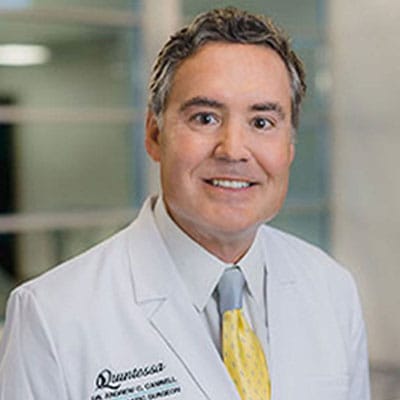
Medically Reviewed by: Dr. Andrew Campbell
Double-Board-Certified Facial Plastic and Reconstructive Surgeon
About Dr. Campbell