
You notice your jawline looks softer in photos. Maybe your cheeks have begun to descend, creating jowls that were not there a few years ago. Or perhaps your face still looks relatively youthful, but loose skin, fullness, or vertical bands beneath your chin make your neck appear older. If the changes are subtle, you may be wondering whether fillers, skin-tightening technology, or another non-surgical treatment could be enough.
The difficulty is that a facelift, neck lift, and non-surgical facelift address different aspects of facial aging. Choosing correctly depends less on your age than on your anatomy and goals. At Quintessa Aesthetic Center, with locations in Delafield, Brookfield, Mequon, Middleton, and Sheboygan, Wisconsin, your treatment can be tailored to your changing needs. This guide explains where each approach fits and when combining treatments makes sense.
Facelift vs. neck lift: Which area are you actually trying to fix?
A facelift and neck lift are closely related, but they are not interchangeable. A facelift primarily rejuvenates the cheeks, jawline, jowls, and lower face by repositioning descended tissues and addressing laxity. A dedicated neck lift targets the area below the jaw, where loose skin, submental fullness, and visible platysmal bands can obscure a previously defined neck.
Because facial aging rarely respects an anatomical boundary at the jawline, facelift and neck lift surgery are frequently performed together. The better question is often not, “Which procedure is better?” but, “Where is the aging occurring?”
The area that bothers you most
Facelift
If your main concern is jowling, sagging cheeks, a poorly defined jawline, or folds that have become more noticeable as facial tissues descend, a facelift may address the source directly. Modern techniques can reposition deeper facial tissues rather than simply stretching the skin, helping restore youthful contours while preserving your natural features. A facelift does not mean changing the fundamental shape of your face. The objective is to address structural descent so that your cheeks, lower face, and jawline appear better defined.
Neck lift
If you are relatively satisfied with your cheeks and lower face but dislike what you see beneath your chin, a neck lift may be a more targeted option for facial rejuvenation. Loose neck skin, vertical platysmal bands, excess submental tissue, and loss of the angle between the chin and neck can make this area look disproportionately aged. A neck lift focuses specifically on these concerns, creating a smoother transition from the jawline into the neck.
What happens to the underlying tissues
Facelift
Facial aging involves more than skin. Soft tissues descend, facial fat can redistribute, and the deeper support structures change. That is why pulling loose skin tighter may not adequately address the effects of established aging. Techniques such as SMAS and deep-plane facelifts address deeper tissues to restore them toward a youthful position. This can create a more meaningful improvement in jowls, cheek descent, and lower-face laxity.
Neck lift
The neck has its own anatomical challenges. The platysma muscles can separate or become more visible with age, producing vertical bands. Skin loses elasticity, while fat under the chin may further blur the jaw-neck transition. Neck lift surgery can address these components rather than treating loose skin as an isolated issue. When both your jawline and neck have aged, treating the face and neck together can also help avoid an obvious mismatch between a rejuvenated lower face and an untreated neck.
Who may need the procedure
Facelift
You may be a facelift candidate when sagging has become structural rather than superficial. If you can physically lift the tissues around your cheeks or jawline and see the improvement you want, that can indicate that repositioning, not simply adding volume, is becoming important. Age alone does not determine candidacy. Genetics, sun exposure, weight changes, skin quality, and facial structure all influence when meaningful laxity develops.
Neck lift
A neck lift becomes particularly relevant when your primary concerns include a “turkey neck,” visible neck bands, loose skin beneath the chin, or diminished jawline-to-neck definition. You may also benefit from adding a neck lift to a facelift if both regions have changed. Treating them as one continuous aesthetic unit can produce a more harmonious result.
Facelift vs. non-surgical facelift: When injectables and devices are enough, and when they’re not
Non-surgical facial rejuvenation has become enormously popular. According to ASPS statistics, minimally invasive cosmetic procedures increased 228% between 2000 and 2018, while surgical cosmetic procedure volume declined 5% during the same period.
Popularity, however, does not make nonsurgical and surgical treatments equivalent. Injectables and energy-based devices can be highly useful when you have early or mild aging. Once you develop significant skin excess and deeper tissue descent, surgery can address anatomical changes that nonsurgical treatments cannot physically remove or fully reposition.
How much laxity you have
Facelift
A facelift helps with more established skin laxity. When your cheeks have descended, jowls are clearly visible, and excess skin has accumulated along the lower face, surgery can reposition tissues and directly manage excess skin. Adding filler to a significantly sagging face does not remove loose skin. In some patients, continually adding volume to compensate for tissue descent can eventually make the face appear heavier rather than younger.
Non-surgical facelift
A non-surgical facelift is better suited to mild or early laxity, volume changes, wrinkles, and skin-quality concerns. Depending on your needs, a customized plan may combine dermal fillers, neuromodulators, collagen-stimulating treatments, and energy-based technologies. These treatments can subtly restore volume, soften lines, improve skin quality, and encourage tightening without surgical incisions or the recovery associated with a facelift.
The degree of change you want
Facelift
If you look in the mirror and want your jawline meaningfully restored or substantial sagging corrected, a facelift can produce greater structural change. Surgery is also worth discussing if you continue pursuing nonsurgical treatments yet remain dissatisfied with the laxity.
In a study of 92 patients who presented to a nonsurgical practice for facial rejuvenation, 47% of respondents had already considered facelift surgery, while 44% said they might consider a facelift later in life. This suggests that some patients choose nonsurgical care as a temporary strategy without necessarily exploring whether surgery better matches their goals.
Non-surgical facelift
If your goal is to look subtly refreshed rather than lifted, nonsurgical treatment may be enough. You may want slightly fuller cheeks, smoother lines, better skin quality, modest tightening, or improved facial balance without undergoing an operation.
At Quintessa, a non-surgical facelift may combine different modalities. Some improvements appear quickly, while collagen-stimulating benefits develop progressively. Results vary by treatments selected, and significant laxity may ultimately be better addressed surgically.
Recovery and maintenance
Facelift
A facelift requires surgical recovery. Swelling and bruising are expected, and you need to plan around work, exercise, social commitments, and other activities while your tissues heal. The trade-off is that surgery addresses deeper structural aging and generally offers a greater degree and longer-lasting correction than nonsurgical treatments can provide.
Non-surgical facelift
Nonsurgical treatment generally involves less downtime, making it attractive if you cannot accommodate surgical recovery or are not ready for an operation. The tradeoff is maintenance. Neuromodulators, fillers, collagen-stimulating treatments, lasers, and tightening technologies have different durations, and maintaining your result may require periodic treatment.

Matching your age and concern to the right procedure
Your birth date should never determine your procedure by itself. Anatomy matters more. Two people who are both 52 can have dramatically different degrees of skin laxity, volume loss, sun damage, and tissue descent. Still, age can provide a useful starting framework.
In your 30s and early 40s: prevention and early correction
If you have good skin elasticity and only mild laxity, surgery may be unnecessary. Injectables can address early volume loss or wrinkles, while resurfacing and energy-based technologies can target skin quality and modest laxity. The key is restraint. Preventive care should not mean continuously adding filler to compensate for changes that do not require additional volume.
In your 40s: non-surgical treatment or a mini facelift
Your 40s can be a transition period. Mild laxity may still respond well to nonsurgical treatment, particularly when your primary concerns are texture, volume loss, fine lines, or early softening of the jawline. If jowling and tissue descent are becoming more apparent, however, a mini facelift or another appropriately selected surgical technique may deserve consideration.
Facelift surgery is no longer necessarily something people postpone until their 60s. The American Society of Plastic Surgeons’ 2024 statistics report identifies that younger patients, particularly Gen X, are increasingly pursuing facelifts to stay ahead of visible signs of aging. Surgeons are increasingly seeing patients in their late 40s and early 50s pursue facelifts.
In your 50s: structural rejuvenation becomes more relevant
By your 50s, you may have more noticeable cheek descent, jowling, jawline laxity, and neck changes. This is where a SMAS or deep-plane facelift may become more appropriate. These techniques address deeper tissues rather than treating aging solely at the skin’s surface. If you also have neck laxity or platysmal banding, your surgeon may recommend combining the facelift with a neck lift to help you look refreshed and naturally rejuvenated.
In your 60s and beyond: comprehensive rejuvenation
More advanced facial aging commonly involves several regions simultaneously. You may notice descended cheeks and jowls, substantial neck laxity, excess eyelid skin, brow descent, and changes in skin quality. A deep-plane or SMAS facelift combined with neck rejuvenation can address the lower face and neck, while complementary procedures may address other areas.
Can these procedures be combined?
Yes. In fact, combining procedures can be particularly valuable when aging affects multiple neighboring areas. A facelift and neck lift are commonly performed together because the lower face, jawline, and neck form a continuous aesthetic unit. Correcting substantial jowling while leaving significant neck laxity untouched, or rejuvenating the neck without addressing obvious lower-face descent, may not create the balance you want.
Your treatment plan can extend beyond those two procedures. A brow lift may address a descended brow and heaviness around the upper face, while an eyelid lift, or blepharoplasty, can address excess upper-eyelid skin or lower-eyelid aging. These procedures may also be performed during the same surgical session to achieve more cohesive facial rejuvenation.
Combining procedures does not mean that more surgery is automatically better. It means identifying each anatomical contributor to what you see in the mirror and deciding which concerns actually need treatment. That principle also applies to nonsurgical care. Even after facial surgery, treatments that improve pigmentation, texture, fine lines, or other aspects of skin quality may complement the structural changes achieved through surgery.
Ultimately, the choice between a facelift, neck lift, and non-surgical facelift should begin with what you want to correct, not which procedure sounds most appealing. Mild laxity and early aging may respond beautifully to a nonsurgical plan. Significant jowling, excess skin, and deeper tissue descent generally call for surgery.
At Quintessa Aesthetic Center, patients throughout Wisconsin can receive a personalized assessment tailored to their anatomy, priorities, and desired degree of rejuvenation. With locations in Delafield, Brookfield, Mequon, Middleton, and Sheboygan, Quintessa offers both advanced surgical and nonsurgical options, allowing you to evaluate the full spectrum rather than automatically steering you toward a single treatment. The right plan is the one that addresses what is actually aging while helping you remain recognizably you. Contact us today to schedule your personalized consultation.
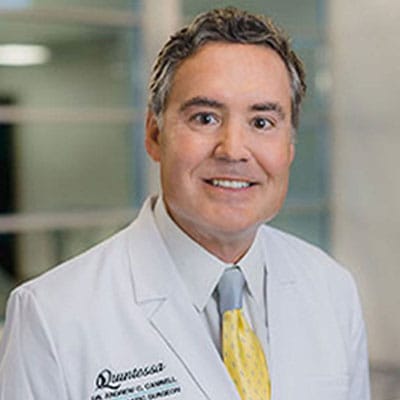
Medically Reviewed by: Dr. Andrew Campbell
Double-Board-Certified Facial Plastic and Reconstructive Surgeon
About Dr. Campbell